
Why the Bed Block debate needs a more compassionate lens – and smarter system design
December 17, 2025Bringing healing at Christmas Time
December 17, 2025

Opinion
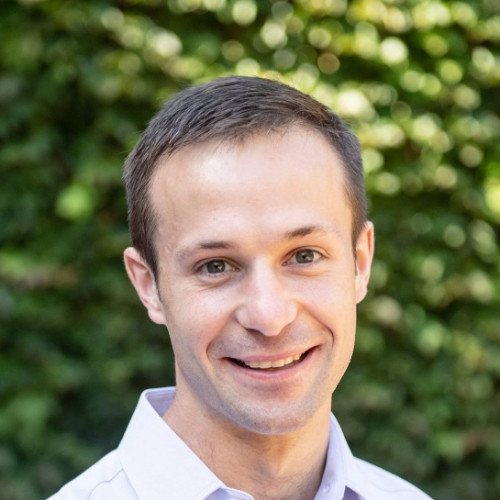
By Dr Xavier Symons, Director of the Plunkett Centre for Ethics.
As my team at the Plunkett Centre for Ethics has worked on the ethics of AI in 2025, we’ve found that clinicians, staff and members of governance teams want to know what the Catholic difference is. They’re surprised to learn that not only do we have a distinctive approach to the issue, but that we’re the world leaders on AI ethics. Here’s three reasons why:
1. Human intelligence is the measure for AI—not the other way around.
The Catholic tradition has never fallen prey to the temptation to see the human brain as a machine, and the mind as “software.” That would mean intelligence is pure computing power, the acquisition of information, or mere task efficiency.
Our tradition instead sees the person as an integrated whole. Intelligence is embodied, relational, and involves “openness to the ultimate questions of life and reflects an orientation toward the True and the Good,” as the Vatican’s excellent 2025 note on AI, Antiqua et Nova, put it.
In the context of healthcare, the human capacity to recognise the vulnerability and dignity of a patient cannot be replicated by AI, because the healing vocation is not a meeting of minds but of “kinds”.
So while AI chatbot interfaces are already being put to good use triaging patients, assisting with administration and other functions, our tradition will always keep the encounter between the patient and clinician at the heart of the healing vocation.
2. Time is on our side—we must be prudent.
Doomsday scenarios in which we’re told we have only a few years to prepare for superintelligent AI to escape the lab and take over the world are becoming commonplace. And anxiety about AI’s possible effect on employment is growing. On the other hand, we are impressed by the growing list of tasks in which AI is said to radically outperform human beings.
Catholics tend to take a long view of history. We can respond to AI hype by exercising the virtue of prudent judgment. In particular, clinicians and hospital governance teams should prudently inquire into AI’s real competence, by paying close attention to the latest research as it develops.
Despite what we hear about AI’s diagnostic capacity, it remains significantly underpowered compared to expert physicians. It cannot reliably process long case notes. AI-enhanced medical technologies are not infallible, and create novel harms for patients that need to be recognised. Then there’s issues of privacy, bias, liability…
We are at the beginning of the AI revolution and have time to ensure technologies deliver consistent quality of care before they are adopted.
After AI technologies are approved, clinicians’ judgment becomes even more important. AI’s natural language outputs can lead us to relate to it if it were a person. In reality, AI is software that can’t be trusted, only relied upon like other tools.
Patients put their trust in the hard-won experience of their clinical and care teams. If they suspect we aren’t using AI to assist clinical decision-making, but outsourcing our judgment, we risk losing their confidence.
3. The church is the world-leader in ethical AI governance
A good AI policy will incentivise the ethical use of AI at the procurement and implementation stage, and will make the task of educating staff easier by embedding ethical principles from the get-go.
In 2020, the Rome Call for AI Ethics was launched to encourage organisations to adopt the principles of ethical AI as part of their approach to governance. The Rome Call‘s first signatories included the Pontifical Academy for Life, IBM and Microsoft. Other tech giants have since signed, along with universities, NGOs and a growing number of healthcare organisations.
Mercy Health became a signatory this year. We hope other Australian organisations will follow their lead. Signatories recognise that AI is a social question too. Much like the church’s stand against modern slavery, the procurement power of the Catholic sector can be used for good to send strong signals to AI developers.
In 2025 we’ve worked with teams from St Vincent’s, Mercy Health and Catholic Healthcare on AI ethics and policy. We held the first of a series of public webinars on AI, to continue next year. It’s rumoured that Pope Leo XVI is writing his first encyclical on AI. Could 2026 be the year the Catholic sector takes the lead?
To stay up to date, subscribe to the Plunkett Centre’s fortnightly newsletter at this link.
Dr Xavier Symons is the Director of the Plunkett Centre for Ethics, a joint venture of Australian Catholic University and partner organisations in the Catholic healthcare sector.
Related posts