Catholic Healthcare is contributing funding to a new study to determine if and how routine clinical data can be used to improve end-of-life care.
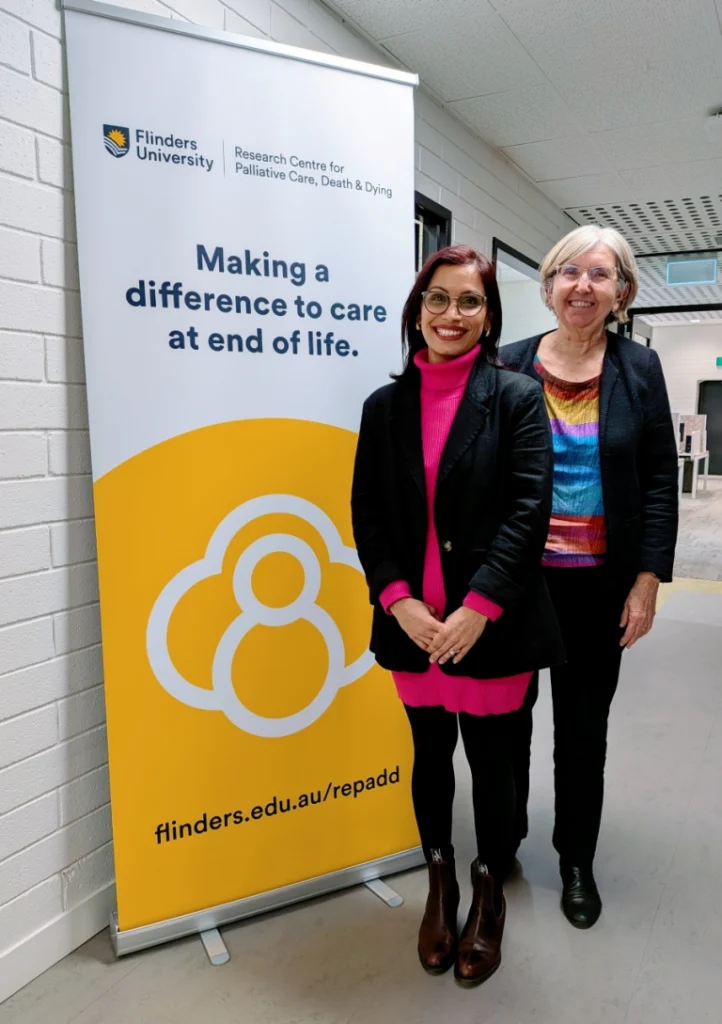
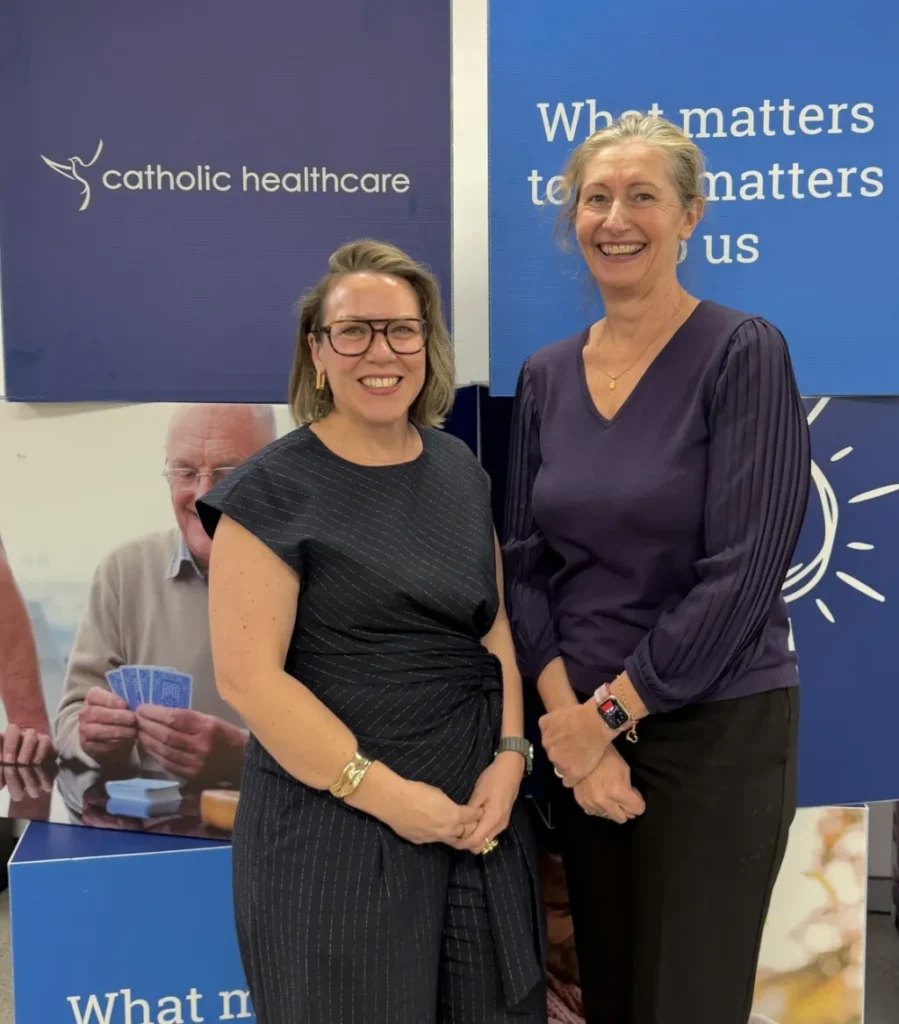
Palliative care nurse practitioner Lara McIntyre – a PhD student at Flinders University – will lead the research project as part of her PhD, which is funded by Catholic Healthcare and a National Industry PhD Program grant worth $240,000 over four years. She will be supervised by Dr Priyanka Vandersman, Senior Research Fellow at Flinders University’s College of Health and Enablement.
The project is one of seven at Flinders to be funded in the latest round of targeted grants from the Australian Government Department of Education.
Ms McIntyre says the study will apply an empirical lens to the “two worlds” of frontline healthcare and operations, as well as the day-to-day realities of clinical care.
“One of the most challenging aspects of research is being able to translate it into practice – hopefully bringing both worlds together will minimise that challenge, ensuring the results are not lost in translation,” she says.
The study will also help nurses improve how they provide care to patients approaching the end of their lives.
“The other part which is often overlooked is our role and responsibility to role model to younger nurses – to show that anything really is possible as nurses.”
This will be achieved by developing an evidence base to help drive improvement.
“Research gives us evidence – and without evidence we cannot progress and deliver the best care possible,” McIntyre says.
Dr Vandersman told Health Matters that nurses are the largest group of both direct care providers and digital health users in aged care.
“Through my own work across nursing and digital health, I see how directly this ties to everyday practice,” she says.
“Nurses need to be part of asking the hard questions about digital and data solutions, because those questions are directly about how we support people to live and die well. We are already central to the care. We also need to be central to the digital solutions and opportunities around us, now and into the future, so our care processes keep improving and we can care well for the people relying on us.”
The National Industry PhD Program provides grants and training to support industry PhD research projects. The program provides grants to universities and their industry partners to jointly support PhD candidates during their degrees.