Australia’s Catholic bishops release statement on social cohesion
August 10, 2026
Catholic Health Australia appoints new Chair and Deputy Chair
August 17, 2026
By Catholic Health Australia Policy Officer Dr Megan Eustace
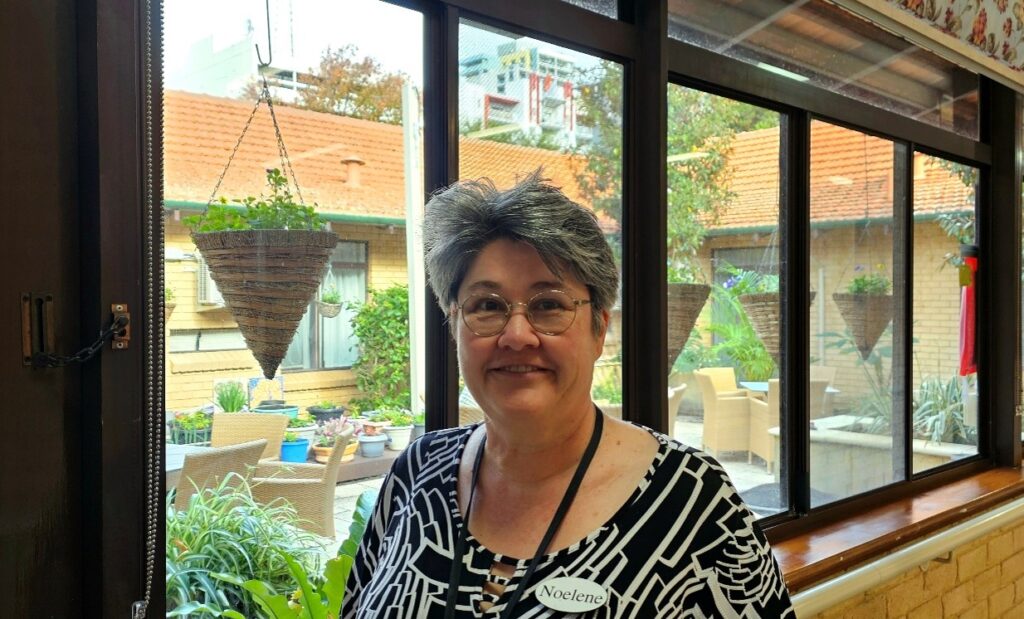
When Noelene Wright, Facility Manager of Archbishop Goody Residential Care in Perth first joined Catholic Homes 15 years ago, she brought with her a passion to support some of the most vulnerable older people in the community – those with limited means, complex social histories, and needs for mental health support. Backed by Catholic Homes, she has shaped the 40-bed residential aged care home into a service that is truly values-led, and one that allows her to “live with the mission”, caring for the holistic needs of vulnerable older people.
A facility built on mission
Archbishop Goody Residential Care serves a gap that the mainstream aged care sector has long struggled to address. Over time, the high-supported resident facility has evolved into a home primarily to serve those navigating mental health challenges or experiencing homelessness.
Noelene keeps at the front of mind that the facility is their home – a place that genuinely knows residents, responds to their needs, and considers social and emotional wellbeing as critical elements of high-quality care.
“When we have people move in with whatever their circumstances be, we’re looking at what they need, we’re looking at what they want. We’re not here to judge, and that’s the important thing. We do the best we can on how they want to live their life.”
Knowing the person, not just the patient
At the heart of the facility’s approach is a model of care that places the person at the centre of every decision. The therapeutic relationships between staff members and residents enable care tailored to the individual, right down to how a resident likes their clothes folded and put away, or the particular way staff interact with them.
“You hear staff talk of how they have a conversation with one resident will be completely different with how you talk to another, because you match your communication styles with your residents and what they need.”
Supported by adequate staffing and familiarity between residents and staff, the facility has built a culture of shared responsibility. Noelene says that flexible care works best – adapting who does what, and when, based on each resident’s individual needs.
“It’s important that it’s not, ‘I don’t do this because of my role’. We do what the resident needs, and how that fits.”
Person-centred and holistic care in action
At Archbishop Goody Residential Care, a high standard of clinical care is a given, allowing emotional and social wellbeing to be treated equally as important as physical health.
Some estimates suggest that approximately 1 in 10 Australians over 65 – 7.9 per cent of men and 11.1 per cent of women – live with a mental health condition, not including dementia.
The team is actively growing capacity in this space, bringing on a counsellor and dedicated mental health nurse, growing activity and lifestyle staff, and training the broader team to support de-escalation and older adult mental health.
Person-centred care is also promoted through staff recruitment practices and put into practice through the actions of the team on a daily basis. “All the little extras”, as Noelene calls them, matter enormously. Shopping buses, photos on walls, clothes mending, and residents’ involved in designing their outdoor and shared spaces. These details are woven into daily life to support connection, dignity and positive ageing.
“We’re looking for little things [from staff]. It just has to be something that you can think of, and you can match action to the value. Because we talk about that a lot. It’s not a poster on the wall people, we need to do it.”
Under Australia’s AN-ACC funding model, residential care homes that demonstrate expertise in supporting people with complex needs linked to a history of homelessness can receive specialised status funding. Noelene says this additional funding has been critical to delivering a holistic model of care.
A learning journey with real results
Noelene is candid about the fact that working in this space is a continuous learning experience, noting aged care is always changing. Meeting the complex needs of this particular resident group requires an ongoing commitment to building staff knowledge and expertise.
Perhaps the most compelling measure of Archbishop Goody Residential Care’s success is what happens to residents after they move in. Observable improvements in health and overall wellbeing among people who arrived at their most vulnerable signal this approach as care that is done right.
Archbishop Goody Residential Care has been supporting Western Australians for over 40 years.