CHA backs AMA push for greater access to out-of-hospital care
December 9, 2024CHA Welcomes move to Pricing Benchmarks in Aged Care
December 13, 2024
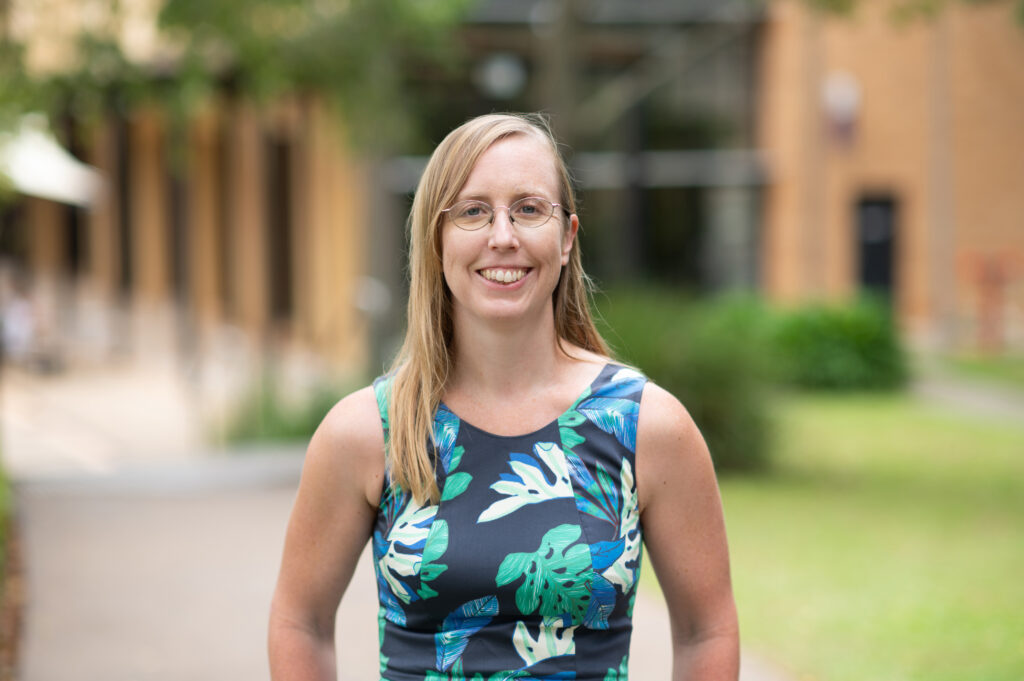
Dr Bridget Pratt from the Queensland Bioethics Centre at ACU has been recognised globally as a research leader in her field. Apart from being surprised that other academics are reading her work, Bridget reflects on what it means to be among the world’s top two per cent.
We spoke to the Mater Associate Professor in Healthcare Ethics on what the emerging bioethical issues are for Catholic healthcare in Australia.
According to the latest 2024 Stanford University Elsevier Global Researcher list, you are among the top 2% of applied ethics researchers in the world. What puts you in the Top 2%?
Essentially, being on the list means that a lot of researchers worldwide are citing my publications, which means the ethics knowledge I’ve been generating through my research and with my collaborators is being used both by other ethicists and also by health researchers. The Stanford List provides a standardised way to recognise researchers who are influential and are making a significant impact on their respective fields. It relies on a number of citation metrics to decide who falls within the top two percent.
What was your reaction when you heard the news?
A mixture of surprise and pleasure. I’m usually just happy to hear that people even read my work and have found it useful. Academics are well aware that we often publish things no one really reads, even other researchers in our field. So hearing that other people are citing my work moreso than a lot of others in my field is really nice to find out.
What does it mean for you personally and professionally?
It means I can now sit back and rest on my laurels… No, it means I keep doing the work I’ve been doing, probably with a bit more confidence that it’s having a global impact and that the topics I’ve chosen to work on are relevant and important to study. Throughout my career, I’ve been lucky enough to lead my own program of research and to be able to decide what topics I work on. In part, that is by attracting my own research funding and, in part, from working at places like the Queensland Bioethics Centre that appreciate what I do and are also keen to build knowledge in similar areas to me. The topics I work on are generally ones that I think few others in bioethics are studying and that I think should be more of a priority for the field, given what’s happening in global health research and in healthcare. But I’m also aware that individual researchers can often pick topics that, while interesting to them, are not really that important or useful to other people. Being on the Stanford List suggests to me that I haven’t fallen into that trap.
Tell us about the journey that led you to bioethics.
The journey started back during my undergraduate degree at Haverford College in the United States. Haverford has Quaker origins, which permeate the campus life and also the course curriculum. For instance, when I attended, Haverford had a social justice requirement that meant all students had to take one subject that examined inequality and prejudice. I think my initial interest in bioethics and, specifically, social justice stems from my time at Haverford. I still have my copy of Paul Farmer’s Pathologies of Power from one of my first bioethics subjects. When I graduated, I (much to my parents’ surprise) turned down an immunology lab job at the University of Pennsylvania. (I was a molecular biology major at Haverford.) Instead, I used a scholarship from Haverford’s Centre for Peace and Global Citizenship to go to India for a few months to learn about its urban and rural healthcare systems. Then, rather than go back to the United States, I decided to come to Australia, where my Dad is originally from. Eventually, I ended up in a Master of International Health program at Monash University that was led by a bioethicist and human rights lawyer, who later became my PhD supervisor. Looking back, my choice to shift from immunology to bioethics was made because I realised that, while I like science, I care more about the social and ethical implications of doing science than being a scientist. And particularly the implications for justice and equity.
Your tool for community engagement in health research sounds really useful. What is the tool and why is it important to engage communities in research priority setting?
The Ethical Toolkit for Sharing Power in Priority-Setting for Health Research Projects aims to help academic researchers and their community partners design priority-setting processes that will make the health needs and knowledge of communities, particularly those considered disadvantaged and marginalised, more visible in health research projects’ topics and questions. The toolkit is a reflective project planning aid for use before priority-setting is undertaken for a health research project. It is a set of four worksheets and a companion document that explains what the toolkit is and how to complete its worksheets. It’s freely available online through this link.
The toolkit is needed because communities rarely have a say in the agendas of the very health research projects that aim to help them. And even where their participation occurs, without attention to power dynamics, it often leads to tokenism: presence without voice and voice without influence. Using the toolkit helps ensure agenda-setting processes are designed so that power dynamics are considered and communities have a real say in setting the agenda of health research projects that impact them.
You’ve done some interesting work recently that looks at the common themes that emerge between theories of social justice, environmental justice and ecological justice. Can you tell us about these themes and their relevance for contemporary health care?
Although deeply interconnected, social justice, environmental justice, and ecological justice each developed largely as separate disciplines and discourses in philosophy. Yet each articulates the same five core dimensions of justice—namely the same five understandings of what is owed to humans or nature as a matter of justice:
- The power dimension calls for reducing unfair power dynamics between humans and between humans and nature.
- The recognition dimension calls for respecting and protecting human and nonhuman difference and diversity.
- The harmony dimension calls for developing relations of shared identity, care and solidarity between humans (past, present, future generations) and between humans and nonhumans
- The wellbeing dimension calls for ensuring an adequate level of wellbeing for humans and nonhumans, particularly those least advantaged
- The inclusion dimension calls for meaningful participation in decision-making processes by all those affected— both humans (current and future) and nature.
Each dimension of justice comprises a lens through which we can identify different ethical responsibilities for healthcare systems. Some of those responsibilities include:
- Acknowledging racism, ableism, and other unfair power dynamics are reinforced by a given healthcare system; identifying how those unfair power dynamics operate at the doctor-patient, institutional, and systems levels; and taking action to diminish them
- Avoiding causing the overexploitation of nature or increasing resource scarcity
- Respecting and making cultural diversity visible within healthcare systems, especially in relation to different knowledge systems and views about health and healing
- Avoiding causing the loss of biodiversity or elements of nature that are essential for individuals’ environmental identity and heritage
- Minimising healthcare systems’ emissions, waste, and pollution through the provision of environmentally sustainable healthcare
You’re currently part of an international collaborative grant on solidarity in global health, can you tell us a bit about what that grant is aiming to do and why?
The grant is aiming to do two key things: 1) unearth conceptions of solidarity from all regions of the world, particularly less heard conceptions, and 2) use those conceptions to develop a Solidarity Index to assess global health research funders’ practices. The rationale stems, in part, from the fact that epistemic injustice—specifically, the silencing of people from the Global South and their knowledge—is a big problem in global health ethics. And this project was trying to advance knowledge in global health ethics in a way that did not reinforce epistemic injustice. The rationale also reflects that during Covid-19 pandemic there was a lot of solidarity rhetoric in global health—for instance, in relation to Covid-19 vaccines—but then a real failure of a lot of global health actors to actually act in a solidaristic way. At present, there are no agreed tools for measuring and holding global health actors accountable for solidarity practice.
What do think are the emerging bioethical issues for Catholic healthcare in Australia?
It is part of Catholic hospitals’ missions to address unmet needs and to promote environmental sustainability. To hear both the cry of the earth and the cry of the poor, as theologian Leonardo Boff puts it. But while these missions can often be synergistic, they can also collide. Hospitals currently face resource allocation dilemmas, for example, around whether to invest in aspects of environmentally sustainable healthcare that cost more than business as usual. The tension is that doing so is seen to divert resources from healthcare’s main business of treating patients. So I think one area that will be important to focus on is to identify where these tensions arise and to develop ethical guidance on how healthcare should navigate them in ways that balance the interests of humans (current and future) and nonhumans.
Aged care also raises ethical questions—both for Catholic healthcare and more broadly—that I think are another key area of focus. Royal Commissioners identified systemic problems that require a reconstruction of the foundational principles and core values of the aged care sector. A philosophical shift is needed and I think identifying what that shift should look like is an important space for bioethicists to contribute. One of the Queensland Bioethics Centre’s doctoral students is doing just that and recently published a paper in the Medical Journal of Australia on the topic. He’s worked in aged care for quite a few years so his work is able to link theory and practice together, which is really important and something that only happens when there is engagement between bioethicists and the health and aged care sectors.
How important is it to have a bioethics centre attached to a Catholic university? What are the benefits – for researchers, patients and the community?
I think it’s essential for all universities to have a bioethics centre attached, not just Catholic universities. Currently many universities in Australia do not have a bioethics centre and/or a critical mass of bioethicists within their staff. Bioethicists can engage with researchers, patients, and community members to listen to and understand what ethical problems arise for them and provide them with guidance or help develop guidance on how to navigate those ethical problems if it doesn’t exist.
Bioethicists can also build the capacity of those training to be researchers and health professionals to identify and navigate ethical problems in their subsequent practice in the research and health sectors. Researchers and health professionals encounter ethical problems and dilemmas regularly in their work but, often due to limited ethics education as part of their health science degree, may not be equipped with the skills to identify them as ethical problems or to ethically analyse them to determine a way forward. Without such skills, they will likely face more moral distress in their work than they need to. They will encounter more situations where the best thing to do on the balance isn’t clear or how to identify it isn’t clear because they haven’t gotten to the point where the ethical values and principles of healthcare practice are second nature to apply in their practice. We need ethicists at universities and in the healthcare sector to ensure these skills are built and maintained in those who will eventually lead our research and healthcare sectors.
#
The Australian newspaper has also named Bridget the top performer in bioethics in 2025. You can read more here.