
CARERS WEEK SHOWS US THERE ARE MILLIONS OF REASONS TO CARE
October 17, 2022
CHA WARNS AGAINST UNDERMINING DEFAULT BENEFITS IN PRIVATE HEALTH INSURANCE
October 21, 2022
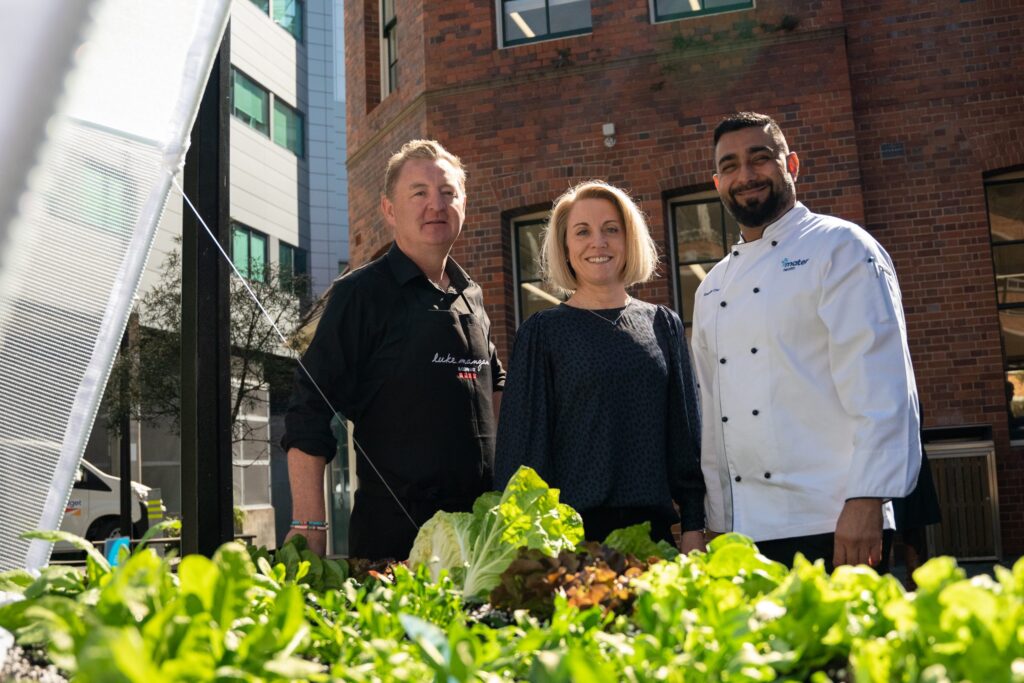
National Nutrition Week, October 16-22, aims to celebrate vegetables and the important role they play in our health and wellbeing.
It’s an important issue, with recent surveys showing that in Australia as few as 4 per cent of men and 10 per cent of women eat the recommended daily serves of vegetables each day.
The Mater is going some way to change that, enlisting celebrity chef Luke Mangan, exploring the benefits of therapeutic horticulture with an edible garden project for staff, and growing fresh greens and herbs in the hospital kitchen area for patients.
The edible garden pilot project is designed to reduce burnout and enhance health workers’ wellbeing.
The first of its kind at an Australian hospital, it is being run in conjunction with Bond University researchers to determine the health and nutritional wellbeing benefits of gardening at work.
Mater Director of Dietetics and Food Services Sally McCray said health workers had been under increased pressure in recent years with the global pandemic, and therapeutic horticulture was one way to “care for carers”.
“We are starting off with a small growers’ group of interested staff members who will maintain the outdoor gardens and be able to harvest the produce for their own use,” Ms McCray said.
“This initial group will inform a broader staff health and wellbeing edible garden program, that we hope to roll out at the end of this year.”
Mater is also pioneering edible gardens for patients, partnering with celebrity chef Luke Mangan and Vegepod Australia to grow culinary greens in the hospital kitchen.
The micro herbs will be used in a range of dishes, co-created by Mater Executive Chef Aman Marwah and Mangan, to boost the nutritional intake of patients.
“Through Mater’s partnership with Luke Mangan, we have developed a range of new menus that provide patients with nutritionally balanced, restaurant-style dishes,” Ms McCray said.
Bond University senior conjoint research dietitian Dr Jennifer Utters said therapeutic horticulture’s benefits were becoming well recognised in disability services, aged-care facilities and other settings, for helping to provide tools for respite and a way to care for carers.
“’There is a growing body of research on the health benefits of gardening, including its ability to reduce emotional distress, improve quality of life and increase the consumption of vegetables,” Dr Utters said.
“For staff, research shows that taking breaks in the garden instead of inside could help to reduce burnout reported by health workers.”
Vegepod Australia has provided a 6m2 self-watering garden for the hospital’s South Brisbane campus.
The three large pods would be used in the pilot with staff able to choose produce from a long list of options, including tomatoes, rocket, spinach, eggplant, chilli, capsicum, bok choy, herbs and more.
“This is the first time we have run a pilot program at a hospital and, apart from cost savings, the gardens enhance nutrition for those who consume the produce while offering huge mental-health benefits,” Vegepod Head of Community Simon Holloway said.