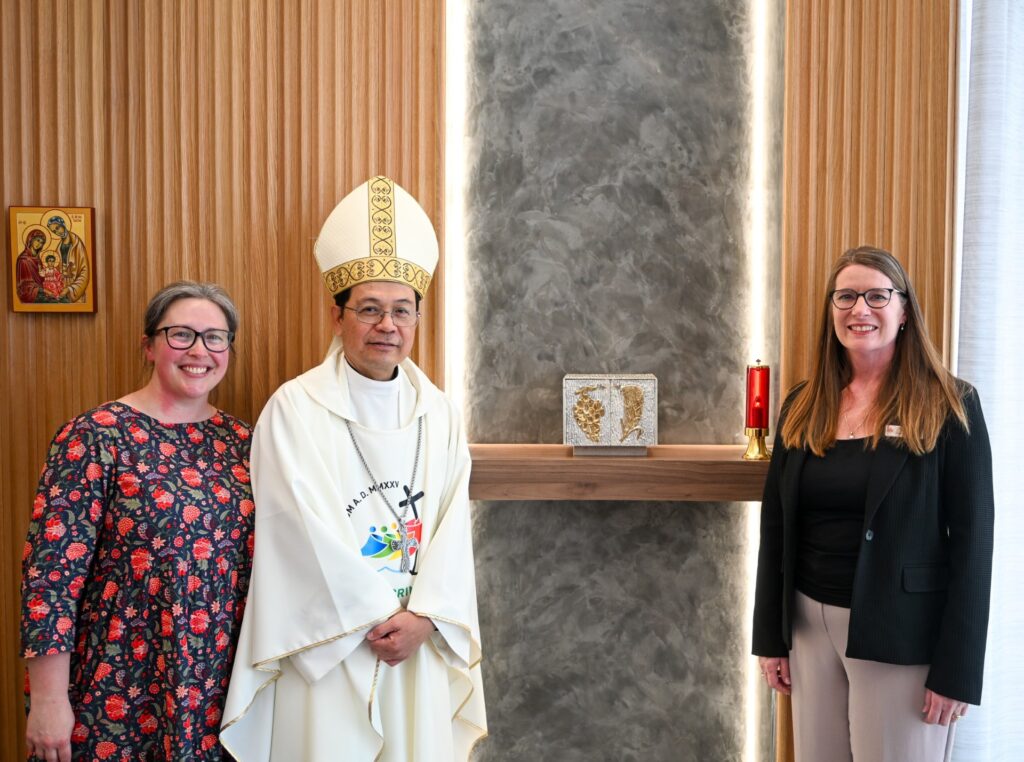
Bishop Nelson Po formally blesses chapel at new Midland Private Hospital
October 13, 2026
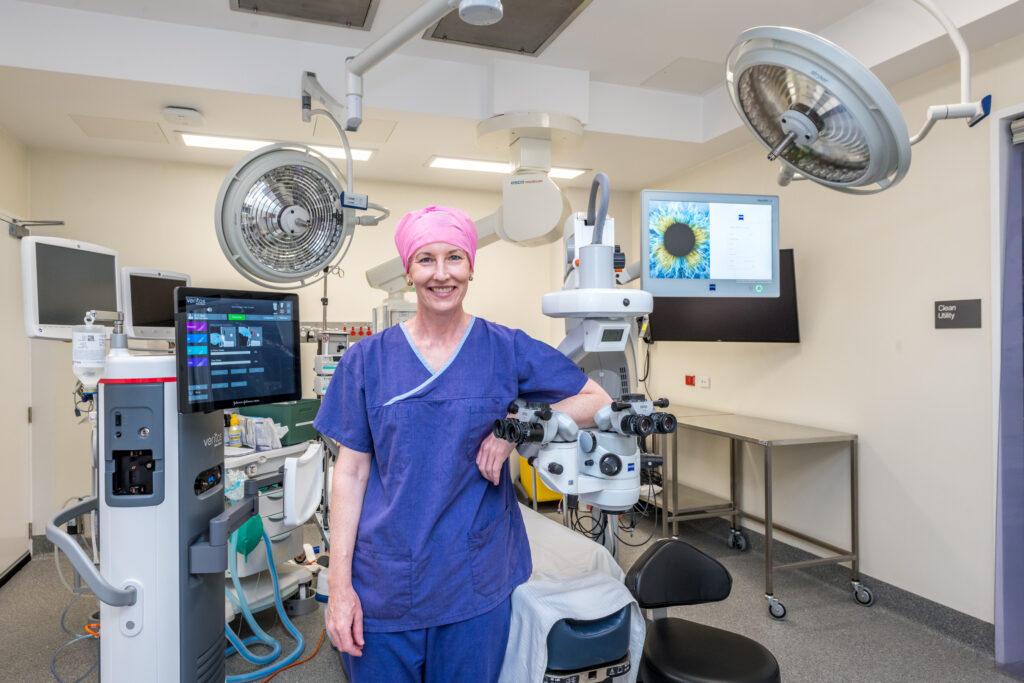
Buderim Private Hospital opens dedicated eye surgery centre honouring founder’s vision
October 15, 2026
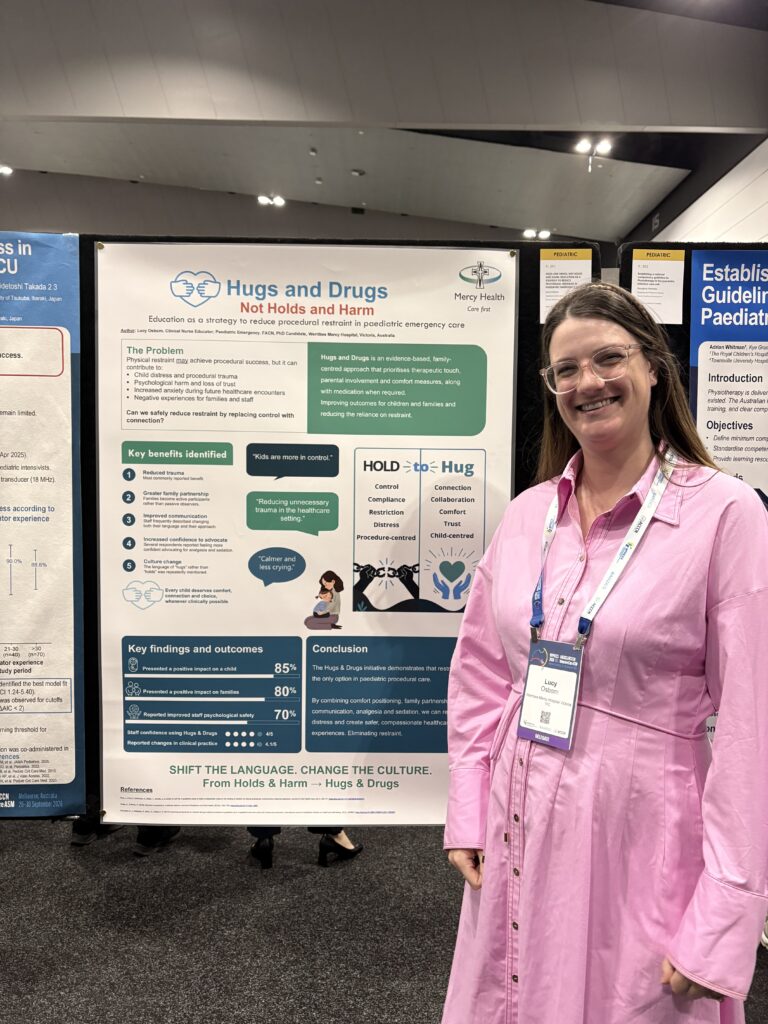
Values instilled by the Sisters of Mercy continue to shape care across Mercy Health today. At Werribee Mercy Hospital, those principles are finding expression through Hugs and Drugs, an innovative initiative that is changing the way children experience healthcare.
Led by Paediatric Clinical Nurse Educator Lucy Osborn, Hugs and Drugs helps clinicians use evidence-informed approaches such as age-appropriate communication, comfort positioning, parental involvement, pain relief and autonomy-supportive care to reduce children’s distress during medical procedures. By helping young patients feel informed, involved and respected, the initiative aims to build trust and create positive healthcare experiences that can influence how children engage with healthcare throughout their lives.
Developed at Werribee Mercy Hospital, the program combines trauma-informed care principles, comfort strategies and staff education to ensure children feel safe, respected and involved in their own care.
“Healthcare interactions in childhood can leave lasting impressions,” Lucy said. “If we can reduce fear, build trust and create safer experiences, we are improving outcomes not only for today, but for future healthcare encounters as well.”
The model is being applied across a range of procedures, including cannulation, wound care, nasogastric tube insertion, fracture management and routine observations. Through bedside coaching, role modelling and education sessions, Mercy Health staff are instilling approaches that support both psychological and physical wellbeing.
The initiative recently attracted international attention when Lucy presented her work at the 13th World Congress of the World Federation of Pediatric Intensive & Critical Care Societies and ANZICS ACCCN Intensive Care Annual Scientific Meeting in Melbourne.
The response from the conference’s more than 1,800 delegates reinforced that the challenges Hugs and Drugs seeks to address extend well beyond a single health service or country.
“There was enormous interest in the work,” Lucy says. “What surprised me was how many clinicians told me this simply is not being discussed in their organisations. There was a real recognition that healthcare systems need to do more to reduce trauma and improve the patient experience.”
Importantly, Hugs and Drugs demonstrates that innovation in healthcare is not always driven by new technology or clinical breakthroughs. Sometimes, innovation means finding better ways to care for people in moments of vulnerability.
For Lucy, the initiative is ultimately about recognising the person behind the patient.
“Healthcare can unintentionally take control away from people,” she says. “We want to give clinicians practical tools that allow procedures to be completed safely while still respecting the person in front of us.”
For Mercy Health, that focus on dignity, compassion and respect for the whole person reflects a tradition of care instilled by the Sisters of Mercy and expressed through contemporary clinical practice. By helping children and families feel safe, supported and heard, Hugs and Drugs translates those values into practical actions at the bedside.