The fabric of life and the health of the mind
November 2, 2022
SOCIAL JUSTICE STATEMENT LOOKS FOR SOLUTIONS TO VIOLENCE AND ABUSE
November 3, 2022
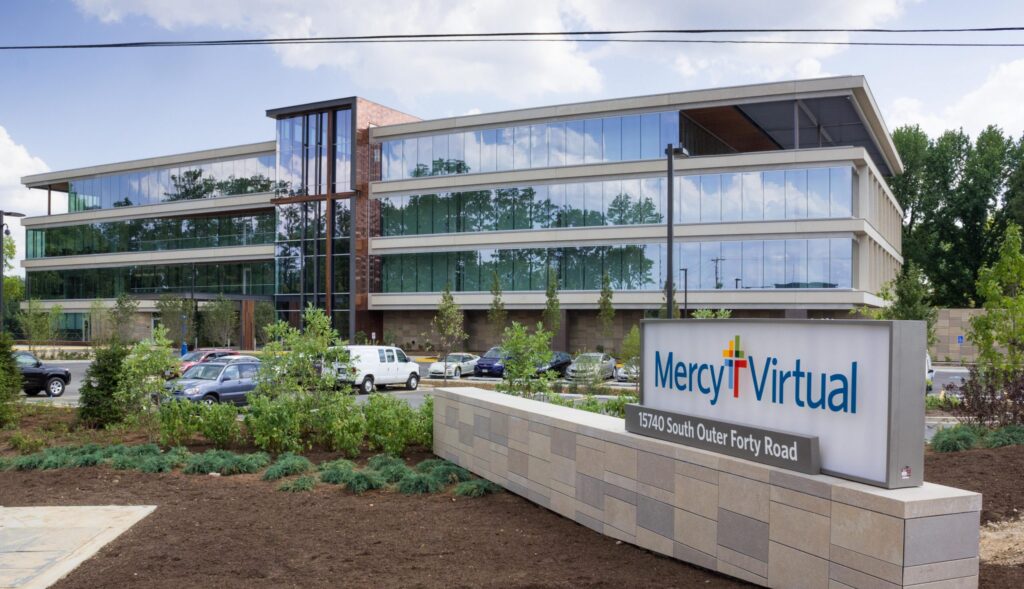
A major health initiative in the US state of Missouri proves the future is here, and that future is virtual.
Opened in 2015, the Mercy Virtual Care Centre is a purpose-built facility that serves patients and medical professionals in 43 hospitals across five states
Described as a “hospital without beds,” the centre is home to a large medical team, but no patients.
Using two-way cameras, online-enabled instruments and real-time vital signs, clinicians “see” patients where they are. That may be in one of Mercy’s traditional hospitals, a physician’s office, or in some cases, the patient’s home.
The centre boasts:
- The largest single-hub electronic intensive care unit in the US, with doctors and nurses monitoring patients’ vital signs and providing a second set of eyes to bedside caregivers in 30 ICUs across five states.
- Patients who come to a Mercy ED with stroke symptoms can be seen immediately by a neurologist via a two-way video link.
- A team of virtual-care doctors dedicated to seeing patients within the hospital network around-the-clock.
- Continuous at-home monitoring for more than 4000 patients, intervening quickly when needed, reducing the need for hospitalisation, and helping them live independently longer.
So far, the centre has achieved astounding outcomes, with a 50% reduction in inpatient admissions and at 50% reduction in the cost of care.
Annie Bannister, a nurse practitioner in the ambulatory services at the Executive Directors of the Outpatient Virtual Services, says virtual care had improved the lives of Mercy’s sickest patients, chronically ill people who were spending large amounts of time in hospital.
These sickest 5% of Medicare patients were responsible for 60% of Mercy’s expenditures and also had very poor outcomes.
“In the past there was a group of patients for whom we never felt like we could deliver the type of care that they needed,” she told me.
“There was a need to do something different and to provide better care for these patients, from the comfort of their home.”
Seriously ill patients also faced issues with travel and were reluctant to seek care.
“They would wait for their symptoms to get so bad, where they’re calling an ambulance, going to the hospital, going into the ICU, spending time there on the regular floor and then back home, and then need to repeat the cycle again in a couple of months.”
A 50-patient pilot program in rural Washington, Missouri, gave patients a blood pressure device, scale, pulse-oximeter and iPad for use at home, and “we just start talking to them every day to see if we could provide better care”.
Working virtually, physicians, nurses and engagement specialists quickly realised that as surveillance and monitoring increased, patients’ outcomes improved.
Mercy Virtual now manages more than 4090 patients at home in Kansas, Missouri, Oklahoma, Illinois, Arkansas.
“They’re spending less time in the hospital and having more happy days at home and healthy days at home.”
Ashok Palagiri, Vice President of Mercy Virtual Inpatient Services, says the whole point was delivering better care. Virtual care enables that and is available 24/7.
Dr Palagiri says Mercy’s virtual ICU, hospitals and virtual neurology networks have US trained physicians who can provide expert help from anywhere in the world, with different time zones meaning they can work day shifts at home while being virtual carers at night in the US.
“Mercy uses physicians both in the United States and in other countries, to ensure that care is delivered to the patients that they serve in a continuous model 24/7, 365 days a year.”
“We’ve got doctors in Israel, Pakistan, India, Philippines, Australia, Saudi Arabia. For me, they’re top-notch physicians and it’s their daytime.”
Dr Palagiri says ICUs in the various Mercy hospitals are no different from others, as there’s always going to be a need for in-house physicians.
But virtual care means there is less need to call on physical backup, as bedside nurses can get immediate help from a “virtual intensivist”, who has full access to everything including the patients’ electronic medical record, and can do most of the necessary work remotely.
Dr Palagiri says virtual care is a boon for rural communities who often miss out on timely specialist care available in big cities.
For example, a small hospital may be forced to wait for specialist help or need to transfer patients elsewhere, often in a situation where every minute counts.
“Any patient that hits any ER at Mercy, who is having an acute stroke, a virtual neurologist gets on, determines very quickly, do they need TPA, that clot-busting drug, or not? Before, there used to be big delays,” he tells me.
Smaller hospitals can also function at all hours, using local day staff and a small number of night staff backed by virtual intensivists.
“They are no longer sending their patients away. They are admitting them to their hospital.
“The families are much more comfortable. They know that they’re going to get the care that they need. And they’re not all driving into the city or not being able to visit their loved ones.”
Dr Palagiri says virtual hospitals could be a boon for Australia’s rural and regional communities.
“You could grow a virtual hospital in a virtual intensiveness program easily so that patients could stay in those rural communities.”
Some patients would still need to attend in person, but virtual care could make that more manageable, especially for the nurses on the ground.
He again points to Mercy’s smaller hospitals, with maybe a primary care physician doing rounds during the day, backed up by virtual teams at night.
“They actually are winning awards for the care that they deliver because now they have 24-7 care.”