
Tiny Patients, Powerful Notes: Music Therapy Strikes a Chord at Mercy Health
April 15, 2026
Forty Years in Aged Care: Progress Made, Challenges That Remain
April 16, 2026

Opinion

By Brigid Meney
Catholic Health Australia Director of Mission
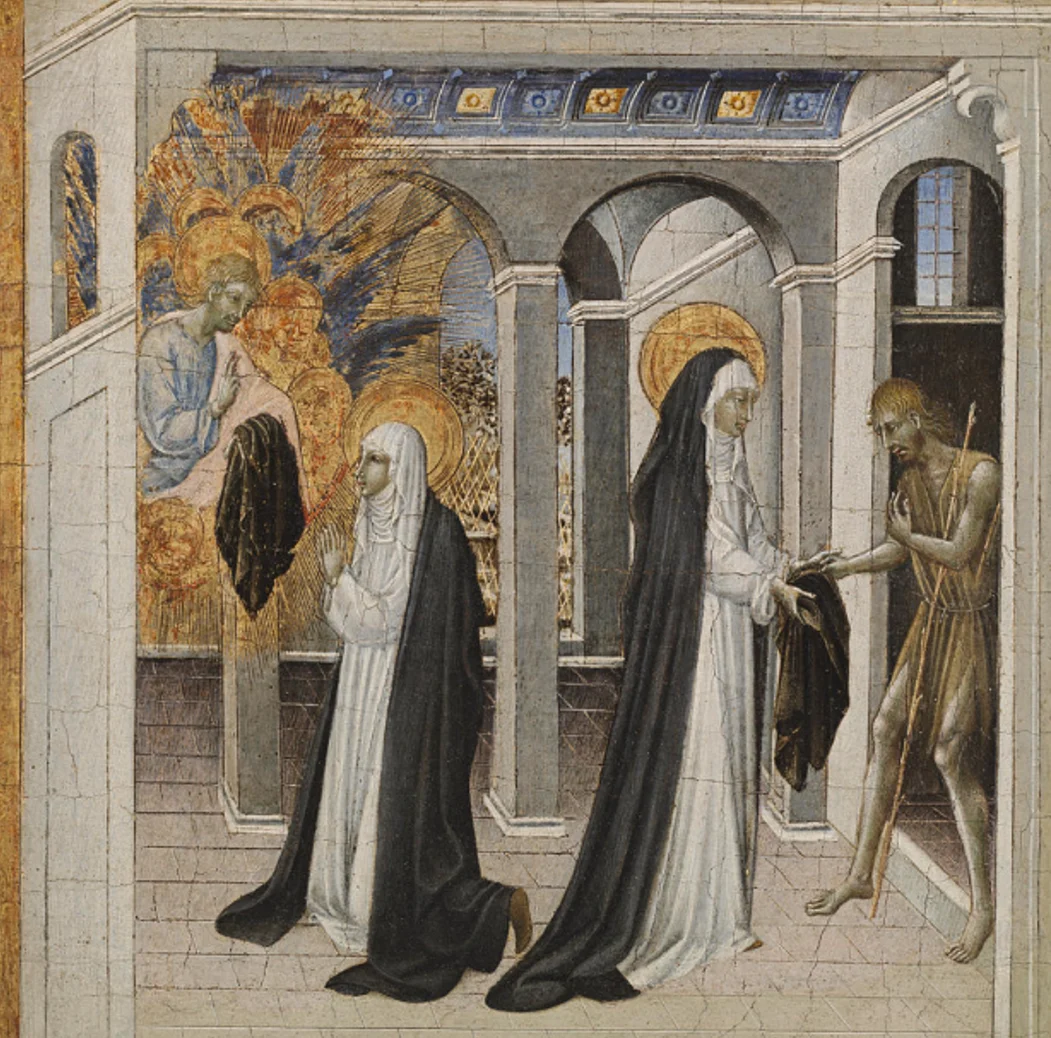
Every April, the Church invites us to remember a young nurse from 14th-century Tuscany who held no official office, commanded no army, and possessed no institutional authority whatsoever. And yet St Catherine of Siena engaged so relentlessly in advocacy to popes, princes, and rulers that she helped reshape the course of the Church and European history.
For Catholic Health Australia, an organisation that exists to fight for the conditions that make genuine care possible, her legacy as nurse and forceful advocate remains deeply relevant.
Justice as an Extension of Charity
It would be easy to revere St Catherine for being a good nurse alone. She nursed the most difficult cases at the hospital of Santa Maria della Scala in what can only be imagined as very unglamorous circumstances in 14th century Italy ravaged by civil war. With few resources, she cared for the dying during a bubonic plague outbreak, washed lepers, comforted prisoners headed to the gallows, and then ultimately helped bury the dead. That work was and remains real and heroic. But Catherine understood something our founders also understood, and something we must never forget. If the structures that produce suffering are left unchallenged, the work of healing cannot reach its full potential.
She did not stay silent when things were wrong. She wrote tirelessly to princes, kings, and popes, urging them to restore the mission and brokering peace between Italian city-states. She remains a revered figure for her ability to demand more from those in authority, often beginning her letters with “Pardon my boldness” before proceeding to instruct and advise her institutional superiors. This was particularly remarkable for a woman of her time.
This is the full Catherine. Not the mystic alone, not the nurse alone, but the woman who understood that love without advocacy is incomplete.

Our Founders Knew This Too
Like St Catherine, the people who founded Catholic health and aged care services in Australia were not simply good Samaritans. They were strategic, tenacious, and often fearless in their dealings with governments, bishops, and institutions that held the resources their communities desperately needed.
Irish-born Mother Berchmans Daly became convinced, through her visits to Melbourne’s sick and poor, that a hospital was needed. She did not simply open one. Under her leadership, St Vincent’s secured government funding (however meagre at the time), grew to 120 beds by 1905, and she established both a nurses’ training school and a clinical school in association with the University of Melbourne to foster excellence. She lobbied, negotiated, fundraised, and built the institutional relationships that secured the hospital’s long-term future. She understood that mission without resources is limited, and she fought for both.
Mother Francis Hanigan shows us how this mission took root in Australian soil. Born locally in Castlemaine, Victoria, the sixth child of a labourer and a teacher, she spent her life doing what Catherine of Siena had done six centuries earlier by refusing to accept that good intentions were enough. She built, she lobbied, she negotiated. She researched hospital design by visiting leading institutions and ultimately delivered the state-of-the-art Mercy Hospital in East Melbourne in 1934. Resources were not handed to her, she went out and secured them.
This is advocacy in its deepest sense – building the structural capacity to serve people with excellence regardless of who controls the purse strings at any given time. What so many of our founders shared was a refusal to accept that the vulnerable should simply be managed rather than systemically championed.
Advocacy Is the Mission
At Catholic Health Australia, human dignity, social justice, and the common good are not aspirational add-ons. They are the operating logic of everything we do. Our members are the largest group of not-for-profit providers in Australia’s health and aged care ecosystem, delivering care with compassion, committed to leaving no one behind.
Right now, that mission demands we speak clearly and persistently. Catholic hospitals face serious viability pressures as insurer funding fails to keep pace with rising costs. Aged care is navigating reform with significant risks if the details are not fought for. Palliative care remains underfunded, particularly in rural and regional Australia. The gap in Aboriginal and Torres Strait Islander health outcomes demands structural response, not goodwill alone. People are being left behind.
St Catherine would recognise all of this. She lived through institutional dysfunction, resource crises, and political fragmentation. Her response was not to lower her expectations. It was to raise her voice, again and again, to whoever needed to hear it.
It was said of Catherine that she perfected the art of kissing feet while simultaneously twisting arms. That balance of deep respect for institutions combined with unrelenting pressure for change is precisely the disposition CHA must bring to government, insurers, policymakers, and the public square.
The Courage to Speak
St Catherine of Siena was just thirty-three when she died, her body spent by fasting, nursing, writing, and fighting. She had dictated hundreds of letters to the most powerful figures of her age (many of which can still be read today), moved the papacy, and held her ground against ridicule and obstruction all within such a short life, fuelled by an unwavering conviction that faith required action.
For every person working in Catholic services, clinical and non-clinical, Catholic or of no faith, long-serving and newly arrived, the work they do each day is not separate from advocacy. It is the evidence base for it.
Every person working in Catholic services today carries this long-standing inheritance. When they provide excellent care to someone who has nowhere else to go, they are making the argument that this sector must be sustained. When they sit with a person and their family at the end of life navigating a broken system, they are demonstrating why palliative care funding is a justice issue, not a line item. When they advocate within their own organisation for a person, put forward a different operating model, or participate in studies driving excellence, they are doing what Catherine did, what Mother Berchmans did, what Mother Francis did.
This April, as we mark her feast, I give thanks for Catherine of Siena, for Mother Berchmans Daly, for Mother Francis Hanigan, and for all those carrying this important legacy every day.
The work continues. So must we.
The Feast of St Catherine of Siena is celebrated on 29 April. She is the patron saint of nurses, of Italy, and of Europe, and was declared a Doctor of the Church in 1970.
Brigid Meney
Catholic Health Australia Director of Mission. Brigid is a policy and advocacy expert who has more than a decade’s experience in the public and not-for-profit sectors
Related posts