Government right to defer aged care price caps: CHA
May 19, 2026
All In: Reconciliation as Partnership
May 19, 2026

Opinion
Mother’s Day arrives with the theatre of breakfast trays, handwritten cards, and the small domestic rituals that say, in a hundred different ways, thank you. And yet, beyond the front doors of our homes, another kind of devotion is already underway.
Hospitals do not observe public holidays in the usual sense. They breathe through them and continue to endure give. And on Mother’s Day, that living organism is powered, mainly, by women who have already given so much before their shift even begins.
In our house, we like to pretend we have it under control. The girls will have remembered the date weeks in advance, coordinating cards and breakfast plans with military precision. And yet, the one person who deserves it most, Chris, will already be halfway through a ward round by the time the toast is buttered. The breakfast in bed will sit there, pristine, until I step in heroically to prevent waste. I have come to describe this as service. No one else does.
We have graduated from the era of indecipherable crayon masterpieces. Those abstract works that demanded a performance of parental insight. “Oh darling, that’s beautiful,” out loud, while privately wondering if it was a family portrait or a bushfire. I miss those years more than I expected. Childhood moves at pace. These days, my cheerful “good morning!” is met either with “what do YOU want!?” or a silence so complete it deserves peer review. The phone screen has assumed seniority.
Chris, for her part, will say all she wants is a simple brunch with the family and a coffee. It is delivered with conviction. I have learned, through repeated failure, that it is also incomplete intelligence. I arrive, each year, with what I consider a thoughtful addition. A vacuum cleaner, for instance. Not just any vacuum cleaner though, but a robot. Sleek, autonomous, practically a member of the household. We could call him Ketut. The girls look at me as though I have fundamentally misunderstood the human condition. They are not wrong.
I pivot to culture. Chris loves period drama, even more than I love drama periods (little gynaecology joke for you there), so I suggest we sit down with a cup of tea and watch something together. I offer up options like The West Wing or Landman with a confidence that can only come from not listening properly. It is, once again, not my finest work.
I will also call my own mother. She will offer to prepare my favourite Indian childhood dishes and drop them off, as though I have not been a functioning adult for several decades. I will accept immediately. I will also call Chris’ mother, who will remind me that Chris works too hard and offer to come and help with “the children,” a term that now refers to individuals entirely capable of critiquing my life choices.
And yet, beyond this domestic farce, there is something grounding about what unfolds in our hospitals on this day.
Walk through any ward and you will see midwives adjusting monitors with the same steady hands that have packed school lunches for years. Nurses moving from bed to bed with an attentiveness that feels less like protocol and more like instinct. Doctors who have left their own families, stepping into rooms where other families are forming, fracturing, or fighting to hold together.
There will be births. Some expected, many not. Babies arriving on their own schedule, indifferent to calendars. For those women, Mother’s Day will never again be a date on a page. It will be the day everything changed.
Elsewhere, mothers sit at bedsides, holding the hands of sons and daughters who are unwell or afraid. And in the emergency department, mothers arrive because something has hurt them. Physical injury, emotional strain, social discord. They come to the one place where care is offered without condition.
It is a convergence of roles. Women who are mothers caring for patients who are mothers, supported by colleagues who understand what that duality demands.
There is no ceremony about it. Just an exchange of effort, skill, and humanity that repeats itself, year after year.
Back at home, I will eventually get it right. Or at least, wrong. The brunch will happen, the coffee will be hot, and I will be reminded that those who give the most rarely ask for anything extravagant in return.
Perhaps that is the real lesson of Mother’s Day in healthcare. Care is not an occasional act. It is a disciplined practice. A choice made again and again, even on the days that are meant to belong to you.
And somehow, that makes it all the more extraordinary.
Happy Mothers’ Day.
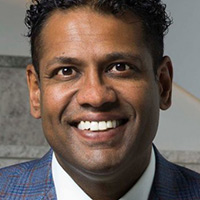
Associate Professor Vinay S. Rane is an obstetrician, gynaecologist and lawyer based in Melbourne. He is a founding director of Melbourne Mothers and holds leadership roles on the Councils of the Australian Medical Association (Vic) and the National Association of Specialist Obstetricians and Gynaecologists.
Related posts