CATHOLIC HEALTH AUSTRALIA MARKS WORLD DAY OF THE SICK BY CALLING FOR EQUAL ACCESS TO HEALTHCARE
February 9, 2021LANDMARK CALVARY BETHLEHEM HEALTH AND RETIREMENT PRECINCT TAKES SHAPE
February 17, 2021
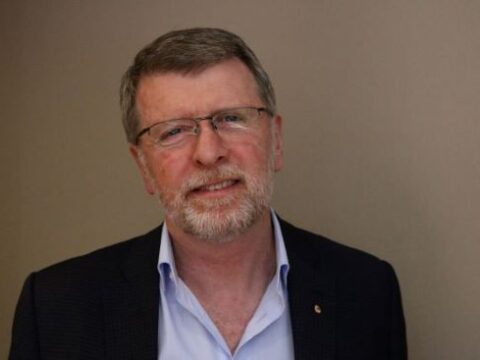
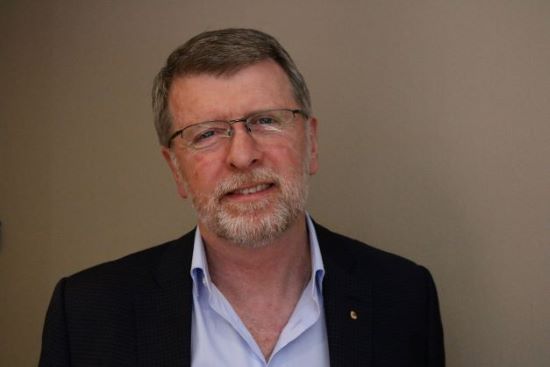
At the relatively tender age of just 31 Stephen Teulan could have declared to himself that he had scaled the heights. He had just become a Deloitte partner, done a stint in Washington DC, and had a year on secondment as finance director at a health group with a $250 million annual revenue.
Far from it. The demands of the role were taking their toll and his Damascene conversion came when he was away working in Perth for an extended period. “I remember missing my son’s eighth birthday and on that day I decided to leave Deloitte,” he recalls.
There was more to life and he found it 18 months later when he arrived at the doors of the Mater Hospital in North Sydney.
He describes going to work for the Sisters of Mercy as “like coming home”. Not because he had grown up in a staunchly Catholic home of five children in Sydney, but more that their values aligned with his. When he moved to lead the Sisters’ Mercy Family Centre, he found that, despite their relatively small size, they were true innovators in the delivery of childcare, social services and aged care, with the Sisters who founded the centre often travelling the world picking the eyes out of the best models.
Mercy Family Centre founder Sister Margaret McGovern agitated the government for what we now call home-care packages and the Order was among the first to roll them out. It was also the first to support those living with dementia at home, and instituting outreach programs to deal with social problems such as hoarding and squalor, as more people moved out of mental health institutions back into the community.
Working there was a revelation. He tells how on his first day he said he didn’t know what case management was. “So I said: ‘I don’t really know. Why don’t you tell me?’
“Two of them had been to see a woman that morning who had dementia and she was living on her own and she had a young man, next door, who was helping her out regularly.
“They said the young man was going to basically leave the neighborhood, sell his house and everything else, because this woman just kept calling him day and night, because she’d forgotten she’d asked him to do something. So she just kept doing it.
“I said, ‘Is it time for her to come into residential care?’ And they said, ‘No.’ And I said, ‘Are you going to send people more regularly to visit her?’ ‘No.’ I said, ‘Well, what did you do?’ They said, ‘We bought him an answering machine that didn’t ring.’”
Stephen says the Sisters and the staff were able to find a solution to every problem because they “understood people” and placed great value on relationships.
He recalls one day a policeman came into the Mater to talk to one of the older nuns after they had found a homeless man dead in a park in North Sydney, and the only bit of identification they found on him was a letter she had written to him after he had been in hospital. “She had kept in contact with him and written to him over many years to maintain that relationship because she knew the importance of that relationship to him. She had people coming in who, 30 or 40 years before, their relatives had been cared for.”
To this day his 16 years of service in the Catholic sector – at Mater, then Mercy Family Centre and finally at Catholic Healthcare – were the most formative in his life, a period of “transformation” that prompted him to spend more time with his family, give up drinking and coffee, and devote his career to aged care. “I think it is more a vocation than a job,” he says.
Yet his time spent working for UnitingCare (“It is a pity that you had to leave the church,” declared his staunchly Catholic mother on hearing of his move) were also highlights, among them the implementation of the household model where residents can live normal lives and have a genuine say in how they receive care. It doesn’t sound like a major deal now but 10 years ago it was a step change. “It was all about empowering both the older person and the care staff to be able to create a home … to have genuine control over their lives.”
The other achievement he is particularly proud of is his role campaigning to end the exclusion LGBTI community members from entering aged-care facilities run by faith-based organisations, which could legally refuse to provide care based on sexual orientation.
When the vote to end this exclusion came down in Federal Parliament it was tight and the votes of independent MPs such as Tony Windsor were key.
Stephen recalls: “They said, ‘Do you know Tony Windsor?’ I said, ‘Yes. We know him. We’re the largest aged care provider in his electorate.’ They said, ‘Would you call his office and see what you can do,’ which we did, and we also got, let’s see, Anglican Retirement Villages, the large aged-care provider in Sydney, and Baptist Care, to call his office as well and say, ‘If you vote for the change in legislation, you’re going to get our praise and not our criticism.’”
Stephen is now a principal at consulting firm Nous Group, which has offices in Australia, London and Toronto, and sits on the boards of Catholic Healthcare and Catholic Health Australia. Later this year he moves to the chairperson’s role at Catholic Healthcare. .
He attributes his drive and faith to his mother who, aged just 32, was suddenly forced to bring up her five children alone. “I think her determination and faith and sacrifice was a great example for us,” he reflects.