
A time for clarity and commitment: Navigating the transition to the new Aged Care Act
July 14, 2025
Calvary Health Care appoints new Chair
July 15, 2025

Opinion
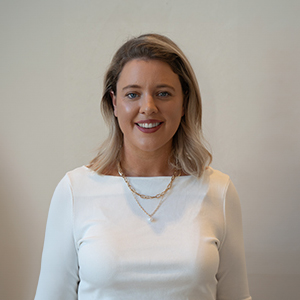
By Brigid Meney
Catholic Health Australia Director of Mission
Across Australia, something quietly hopeful is stirring in the heart of the Catholic Church. It’s not always captured daily in headlines or social surveys, but it’s visible to those paying attention: more and more adults are stepping forward to be baptised, confirmed, and welcomed into the Catholic faith.
This year, the Archdiocese of Sydney celebrated the enrolment of 384 new catechumens and candidates preparing to enter the Church—up from 266 in the previous year. Melbourne welcomed nearly 350 people on similar journeys.
These are not isolated statistics; they form part of a broader, emerging pattern of renewed interest in the Catholic faith among adults—many of whom come from culturally and linguistically diverse backgrounds. Across dioceses, catechists and clergy alike are reporting a palpable sense of spiritual searching, conversion, and belonging.
Some are calling this phenomenon a “second spring” for the Church in Australia. But it’s not a return to the Church of decades past. It’s something new, something deliberate. Faith is not simply being inherited as it once might have been—it’s being chosen.
At the same time, we face sobering trends. The number of infant baptisms, religious vocations, and regular Mass attenders has declined over the past two decades. In 2007, there were 5,700 religious sisters across Australia. Today, there are around 3,500. Globally, the number of baptisms—once a key indicator of Church vitality—has fallen from 17.9 million in 1998 to 13.3 million in 2022. And yet, even in this context of decline, there is renewal.
This paradox—a Church that is both shrinking and awakening—is relevant to Catholic Health Australia (CHA) and the services we represent. As the largest grouping of non-government health and aged care services in the country, we sit at the important interface between the Church and the wider community. Our hospitals, aged care homes, disability services and community health programs are often the face of the Church for people who have never or may never set foot in a parish. What happens in the life of the Church shapes us—and we in turn are called to shape our response to the times in which we serve.
So what does this new moment in the life of the Church mean for our mission in health and aged care?
Firstly, we must recognise the changing face of Catholicism in Australia.
The rise in adult conversions and spiritual seeking is a sign that people are still deeply hungry for meaning, relationship, and truth. Many of those entering the Church today come from migrant communities, where faith is central to culture and daily life. They bring with them vibrancy, resilience, and a deep reverence for prayer and family. As our services respond to the needs of an increasingly diverse population, our mission must reflect this diversity in our workforce, our pastoral care, and our models of service. A multicultural Australia is reflected in our multicultural Church, and in turn calls for intentionally multicultural ministries.
Secondly, the decline in traditional vocations challenges us to continuously reimagine leadership and formation.
For many decades, our Catholic hospitals and aged care services were animated by the presence of religious sisters and brothers—women and men whose lives were a visible expression of Christ’s healing love. Today, with fewer religious physically present in our health and aged care services, the mantle of mission leadership is increasingly carried by laypeople. This is not a deficit to be lamented, but a new expression of shared responsibility and leadership. However, it requires intentional investment in formation, so that staff in Catholic services understand not just what we do, but why we do it.
Formation should not be confined to executive roles. Every person who works in a Catholic health or aged care service—whether they are a cleaner, a nurse, a kitchen assistant, or a board member, Catholic or of no faith at all—has a role to play in our mission. When we speak of “mission in every role,” we speak of the sacred dignity of everyday service. To provide care is to encounter Christ.
Thirdly, we can harness the growing number of people who are discovering or rediscovering faith, spirituality and meaning as adults.
Many people exploring the role of faith and spirituality in their lives, bring with them a zeal and freshness that can reinvigorate our own sense of purpose. Particularly among those experiencing the most complex of health challenges witnessed daily in our services, there is often a renewed understanding of meaning, insight and reflection present that offers wisdom and inspiration about our own mortality and purpose.
Catholic health and aged care services can be places where these reflections on faith and spirituality are not just respected, but nurtured as an exchange and shared encounter. Spiritual care, chaplaincy, ethics grounded in Catholic teaching—these are not optional extras, but central expressions of our identity. They make our services distinct, for both those who work in these places and those receiving care.
There is a profound opportunity here. We can be places of continued accompaniment and encounter. We can also ensure that our advocacy—on aged care funding, equitable access to healthcare, end-of-life ethics, or workforce justice—is informed by a Gospel lens and a commitment to human dignity that resonates with all.
It begins by welcoming all, and being an expression of the best our faith has to offer.
We serve everyone, without distinction or discrimination. Whether a patient is Catholic, another faith, or no faith at all, they are welcomed as Christ would be. Our mission is not to proselytise, but to care deeply and to stand with people in their moments of vulnerability. Yet, there remains a link between our identity as a ministry of the Church and the stories of faith unfolding across the country. The values that underpin our care—dignity, solidarity, compassion, the sanctity of life—are drawn from the same wellspring of Catholic belief that inspires someone to seek baptism. In this way, even when not spoken, the Gospel is present in the quiet, daily witness of love in action.
In the end, the Church is not simply its buildings or statistics, deemed credible only by an assessment of mass attendance at any given point in time. It is the Body of Christ—alive, searching, adapting, and called to service. The signs of hope we see in adult conversions should not be romanticised, but neither should they be overlooked. They are a reminder that God is always at work, quietly and powerfully, in the hearts of people.
In this moment of both challenge and grace, Catholic Health Australia reaffirms its commitment to be a living sign of Jesus’s healing presence in the world. We are called to provide care, and to bear witness—to be, in every ward and waiting room, an active sign of Christ’s compassion for all who find themselves in our presence.
That is the invitation before us.
Brigid Meney is Director of Strategy & Mission at Catholic Health Australia
Brigid Meney
Catholic Health Australia Director of Mission. Brigid is a policy and advocacy expert who has more than a decade’s experience in the public and not-for-profit sectors