Good Weekend: Mercy Place Residents in the Spotlight
September 17, 2025
Catholic aged care providers secure $55 million in government grants
September 19, 2025
This week is Dementia Action Week – focusing on a disease that not only touches the person living with the condition, but everyone around them.
This year’s theme, ‘Nobody can do it alone’, is one familiar to for-purpose organisation VMCH, with many of the people it supports touched by dementia. From aged care residents, carers, home care package recipients, retirees, allied health and disability services clients, each person is on their own unique journey.
VMCH’s approach to dementia care is as diverse as the people it serves — offering tailored programs and therapies that meet individuals where they are on their journey.
Enter, Lizzy!
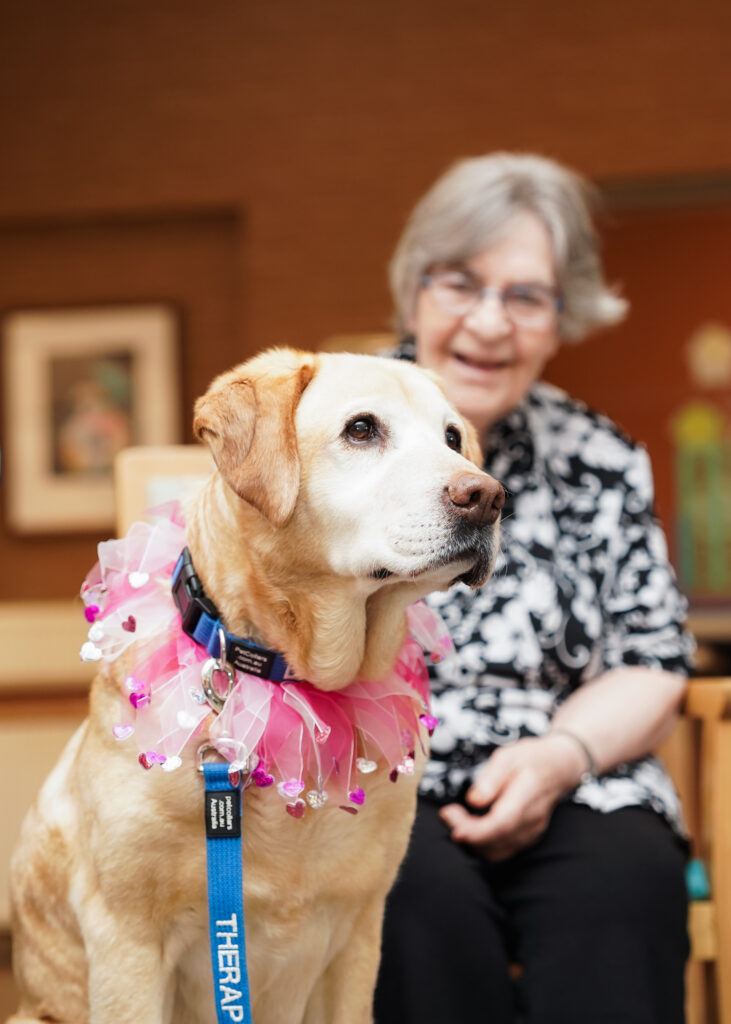
Lizzy the Labrador is a therapy dog who regularly visits VMCH’s Corpus Christi Aged Care Residence in Clayton, bringing smiles and joy to all, particularly those living with dementia.
Research from ARIIA (Aged Care Research and Industry Innovation Australia) has found that pet therapy (including dogs) improved mood, engagement and interaction, and reduced depression and the use of pain medication in people living with dementia.
Lizzy’s handler and owner, Jenny Willms, has been involved in pet therapy for 15 years with Dogs Victoria. Her connection to VMCH and pet therapy is a personal one. Her mother-in-law Margaret, aged 99, and sister-in-law, are Corpus Christi residents. Jenny’s own mum also has Alzheimer’s disease, and it was during a visit to her mum that Jenny saw first-hand the positive impact dogs can make. She took it on as a job shortly after.
“You might walk into a room and there is very little interaction, but by the time the dog has done its rounds, people will be interacting with one another and talking about their own dogs,” Jenny says.
“Residents would start to go through their photos and bring old photos of their dogs to show me. Handbags would open, and biscuits would come out! It was amazing to realise the joy that dogs can create.
“It’s also affective for people who are non-verbal. We had a lady here a couple of weeks ago and I could see she was enjoying having Lizzy there just from the softness in her eyes. I think it’s young children or animals that bring that out in people.”
Studies also show that when someone has been diagnosed with dementia, more than a third report being treated differently, often finding that family and friends don’t know how to interact with them.
VMCH General Manager Residential Aged Care Sally Bliesner says it’s for this very reason that pet therapy is such a success for residents living with dementia.
“Dogs don’t discriminate. They don’t see a diagnosis — they simply respond to the person in front of them with warmth and acceptance. For someone living with dementia, that unconditional connection can be incredibly powerful, especially when others may struggle to know how to interact.”
Sally added dog therapy was among a wide range of supports VMCH employs to support residents living with dementia, including music therapy, reminiscence programs, and allied health services to support cognitive and emotional wellbeing.
“We’re so grateful to our dedicated staff — and to visitors like Jenny — who bring warmth, patience and joy into our homes every day, helping residents feel seen, valued and connected.”